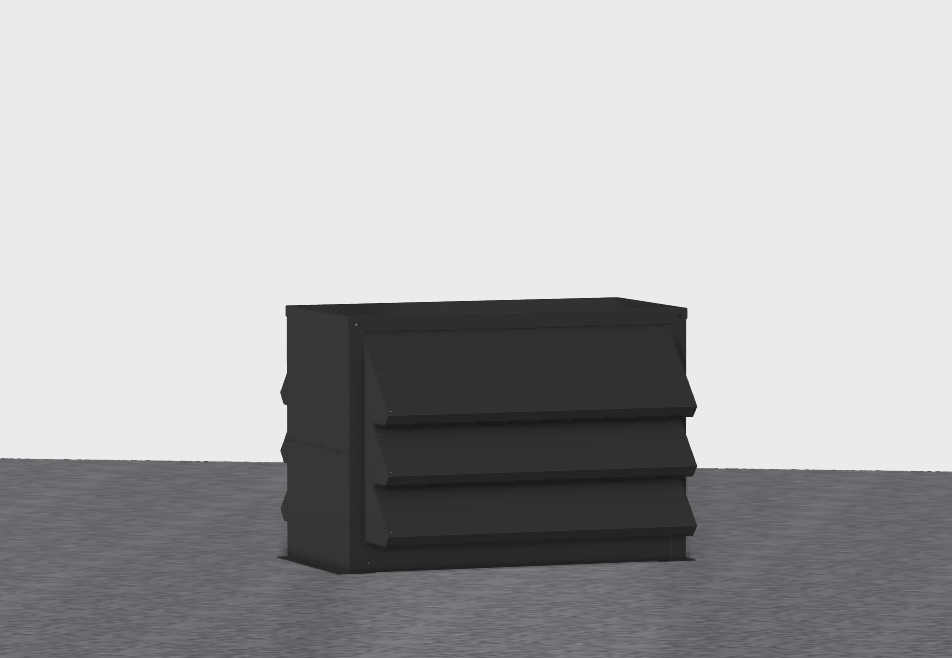
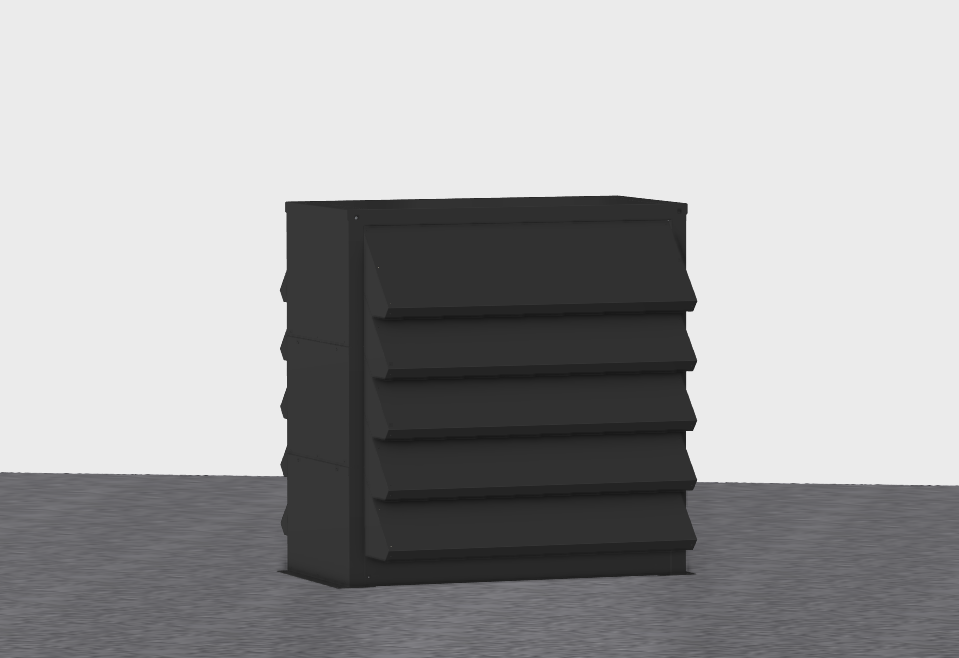
Planning a Heat Pump Installation? Make Fitting the Enclosure Easy!
Heat Pump Installation: How to Plan the Setup and Keep Things Quiet?
Deciding to switch to a renewable heat source is just the first step. The critical phase is the heat pump installation itself, which requires precision, technical expertise and thorough site preparation. A correct installation guarantees years of efficient, trouble-free operation.
This article explains why it pays to plan a heat pump installation well in advance and what to look out for when connecting the unit to avoid noise problems.
“I would highly recommend Silencions. The enclosure was custom-made and installed a year ago. Everything went exactly as agreed. The fit is perfect and it looks great. It also provides additional protection for the heat pump. My neighbour has stopped complaining about the noise. The installation guide was straightforward. The components are solidly built — no change in condition after a year of use. Communication with the company was exemplary at every stage. I have not noticed any increase in the heat pump’s running costs.”
Foundation and Site Preparation: How Does the Base Affect Heat Pump Installation?
A proper heat pump installation starts with a solid, well-thought-out base. The foundation must not only be perfectly level but also leave adequate clearance around the unit. It is worth reserving extra space that will allow an acoustic enclosure to be fitted at any point. Building in that margin from the start is the simplest way to avoid the extra cost and effort of adapting the enclosure structure later.
One of the key aspects to address before work begins is how the pipework and cables will be routed. Running them underground is the preferred approach: it prevents clashes with the enclosure mounting brackets and makes future servicing significantly easier. A neat outdoor unit installation — with flow and return pipes emerging directly from the ground beneath the unit — also looks cleaner and, more importantly, improves “acoustic tightness”, because sound cannot escape through wall penetrations or the substructure.
Underground pipes and cables
Underground routing prevents clashes with the enclosure and simplifies future servicing.
Distance from surrounding infrastructure
The minimum distance from walls and fences is a prerequisite for hassle-free acoustic enclosure installation.
Base for the heat pump
Adequate clearance around the unit allows the enclosure to be added later without any changes to the foundation.
How to Position the Outdoor Unit to Minimise Noise?
The location chosen for the outdoor unit has a major impact on the comfort of both the occupants and the neighbours. Under heavy load (e.g. on frosty days) a heat pump generates noise that can become a nuisance to those nearby. The distance from the wall must also be considered to prevent sound resonance and to allow easy service access.
When planning the unit’s position, bear in mind that the distance from the property boundary is governed by regulations on permissible noise levels. Although the law does not specify an exact minimum setback, many local authorities treat 3 metres from the property boundary as the minimum acceptable distance. For this reason it is well worth planning the unit’s location carefully at the design stage.
The installation should also take account of the fact that the heat pump performs best in open, well-ventilated surroundings. If, despite this, the unit proves too noisy, an acoustic enclosure is the answer — it reduces sound levels without affecting operational efficiency.
Why Does Selecting the Right Heat Pump Capacity Matter?
A heat pump that is undersized or oversized is a direct path to high running costs and premature failure. Sizing must be preceded by an accurate building heat-loss calculation (heating load calculation). If the heating capacity is chosen by guesswork, the unit may fall into short-cycling — excessively frequent start/stop cycles.
Short-cycling drastically shortens compressor life and increases electricity consumption, but it also becomes a source of irritating noise. Every start-up forces a rapid ramp-up of the fan speed, which in a quiet neighbourhood is far more noticeable than steady, continuous operation.
Monobloc or Split — Which Heat Pump Is Quieter?
The type of heat pump determines both the installation approach and the acoustic characteristics of the unit:
Split heat pump: the system is divided — the compressor and fan are located in the outdoor unit, while the heat exchanger and controls are inside the building. This separation allows the hydraulic components to be isolated effectively, but it means the outdoor unit becomes the sole, concentrated source of outdoor noise.
Monobloc heat pump: all components are housed in a single outdoor casing. Although manufacturers take care of factory insulation, the greater number of working parts can generate additional vibration and low-frequency tones. Silencing this type of unit often calls for a bespoke acoustic enclosure capable of handling a wider frequency range.
Regardless of the choice, the keys to success are a correct installation and a stable base. Every model has its own acoustic profile, which is why professional sound attenuation must be tailored to the specific machine.
What Electrical Aspects Must Be Considered During Installation?
Every heat pump requires a dedicated electrical supply connection. The supply cables must have adequate cross-section, and the distribution board must be fitted with appropriate overcurrent and residual-current (RCD) protection. Network stability is crucial for reliable operation, especially when the auxiliary heater draws a high load during peak demand periods.
It is worth noting that a well-organised arrangement of supply cables — routed neatly in conduit or underground — greatly simplifies subsequent installation of an acoustic enclosure. Tidy cabling makes it easier to fit the enclosure structure flush with the base, improving both the appearance and the acoustic performance of the complete installation.
How to Eliminate Heat Pump Noise Without Dismantling the Unit?
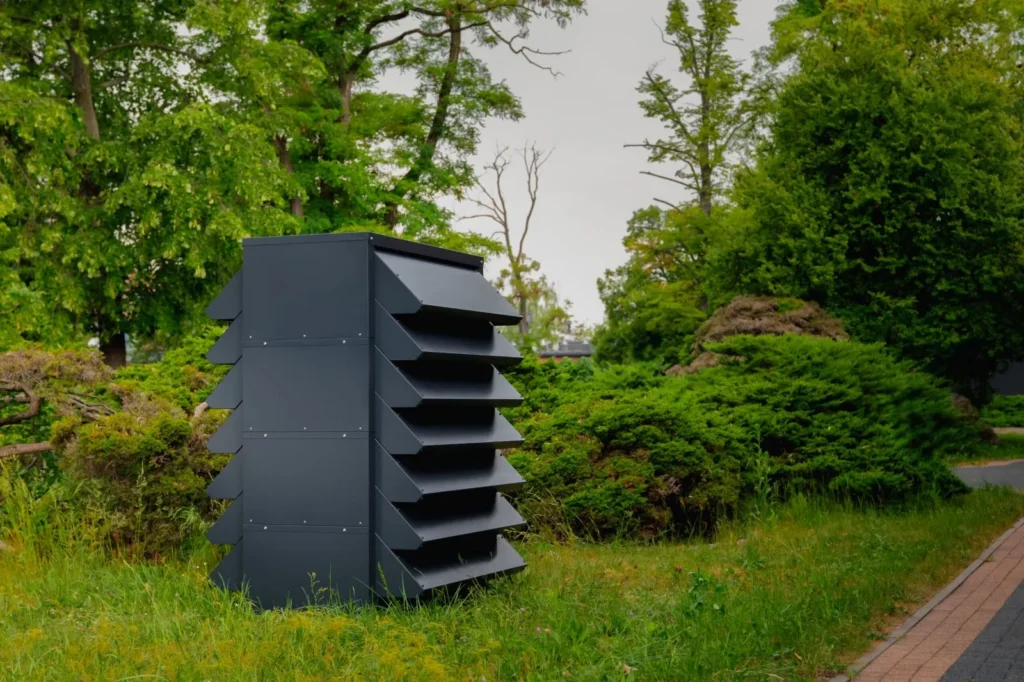
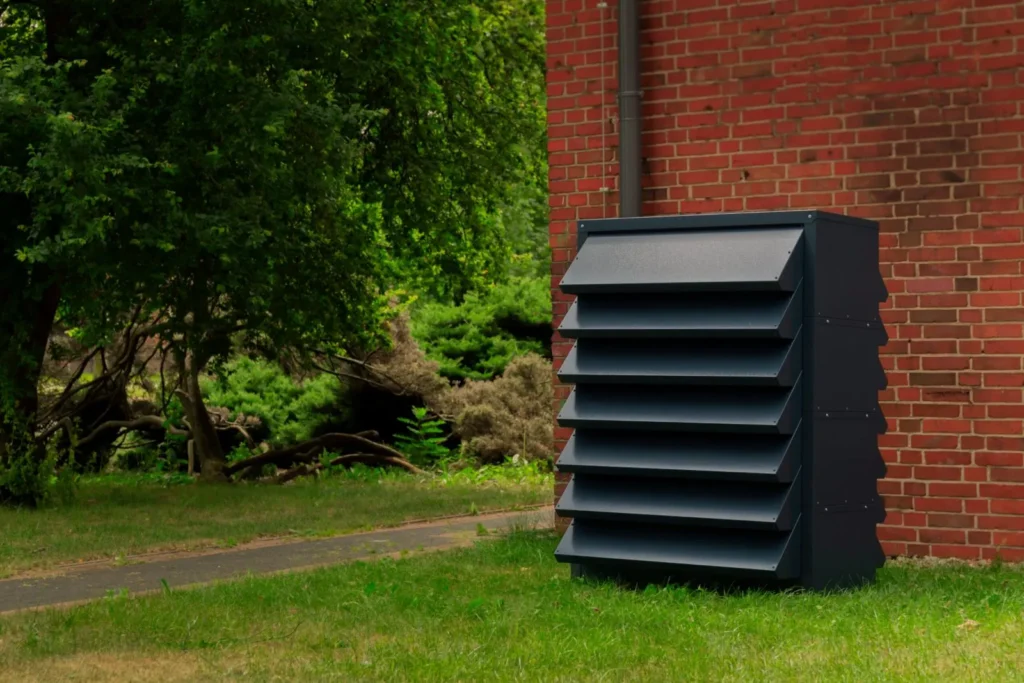
Even a top-of-the-range heat pump generates sound that can be a nuisance if the unit stands close to a terrace or bedroom windows. Fitting additional protection does not require a specialist team, however — the Silencions acoustic enclosure can be installed independently, thanks to a clear, step-by-step guide.
Our enclosures are designed so as not to reduce the efficiency of the unit. Thanks to the specially engineered louvre geometry, airflow remains at the optimum level and the heat pump can freely exchange energy with the surroundings. The enclosure also provides additional protection for the outdoor unit against weathering and mechanical damage.
Key Points to Remember When Installing a Heat Pump
Professional installation: use a certified installer to maintain the warranty and ensure the safety of the installation.
Capacity selection: an accurate calculation of the building’s heating load is the key to efficiency and low electricity bills.
Location: plan the outdoor unit position carefully, taking into account neighbours’ comfort and adequate airflow.
Base preparation: a stable foundation with proper condensate drainage is essential.
Periodic servicing: regular maintenance by a qualified service technician extends the life of the entire installation and prevents failures in the hydraulic and refrigeration circuits.
PRICES AND MODELS — SILENCIONS s|HP| HEAT PUMP ENCLOSURE
Internal dimensions: – depth 550 mm – width 1060 mm – height 1540 mm
Have more questions? Get in touch!
Any doubts about installation? Contact us — we are happy to answer your questions and ensure the enclosure fitting goes smoothly and without any issues.
We are available on working days from 9:00 to 17:00.